 CyberCode
Blog
Practical takes on web development, tools and staying safe online.

2026-09-03
How to Convert Text to Binary (ASCII and UTF-8 Explained)
Text becomes binary by looking up each character's number and writing it in base 2. How ASCII and UTF-8 work, with worked examples and the emoji gotcha.
2026-08-30
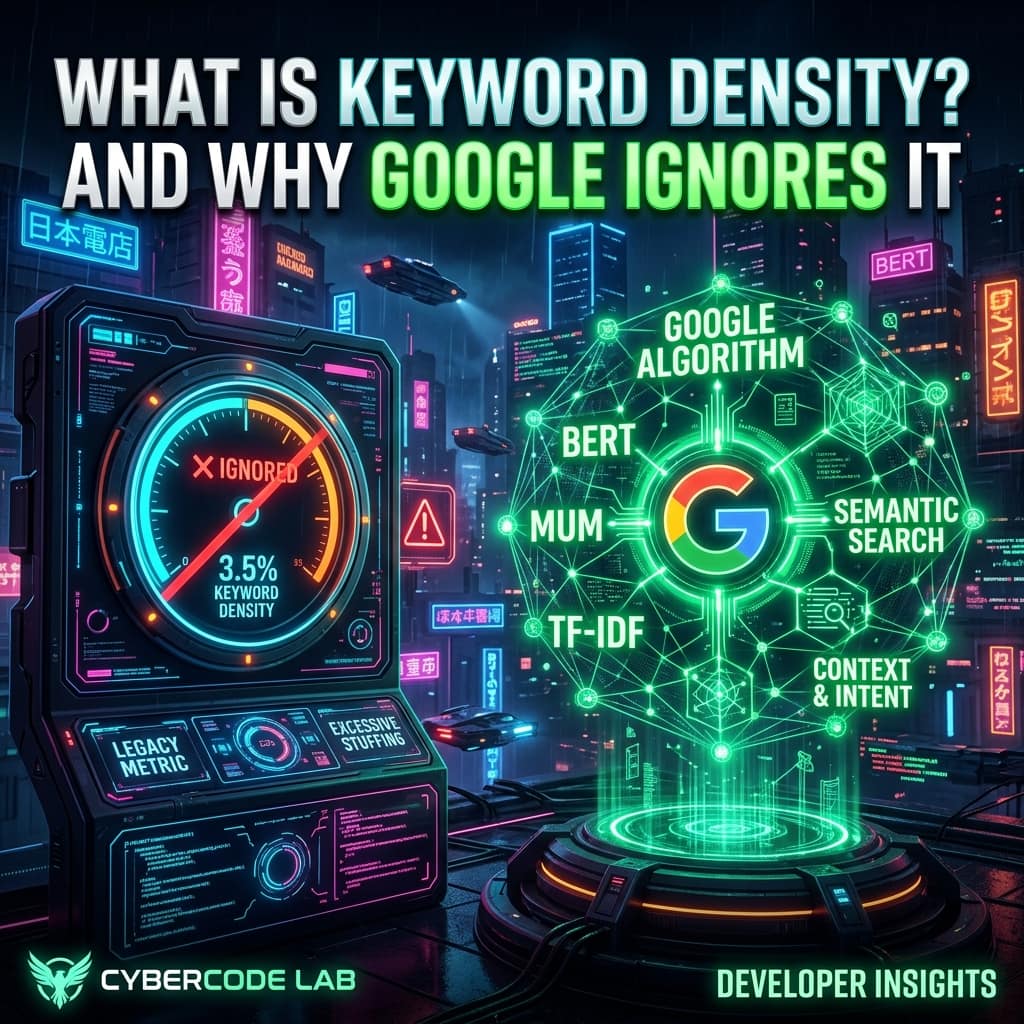
What Is Keyword Density? And Why Google Ignores It
Keyword density is not a Google ranking factor and there is no ideal percentage. What the number really measures — and the three things it is still useful for.
![Three neon pipelines comparing JavaScript array loops — for and forEach passing [1,2,3,4,5] through unchanged while map transforms it into [2,4,6,8,10]](/_next/image?url=%2Fimages%2Fblog_js_array_loops.png&w=3840&q=75)
2026-08-26
JavaScript Array Loops: for vs forEach vs map
Which JavaScript array loop should you use? A decision table for for, for...of, forEach and map, the async bug forEach causes, and a real benchmark.

2026-08-17
How to Convert a Unix Timestamp to a Date in JavaScript
Convert a Unix timestamp to a date in JavaScript with new Date(timestamp * 1000). The seconds-vs-milliseconds rule, time zone formatting and common fixes.

2026-08-09
Why Does Unix Time Start on January 1, 1970?
Why does Unix time start in 1970? The real reason Bell Labs chose the 1970 epoch — and why counting seconds from a fixed zero point keeps time simple.

2026-08-03
How Is EMI Calculated? Formula and Examples Explained
How is EMI calculated? Learn the exact loan EMI formula, see a step-by-step worked example, and understand why a longer tenure means far more total interest.
2026-07-26
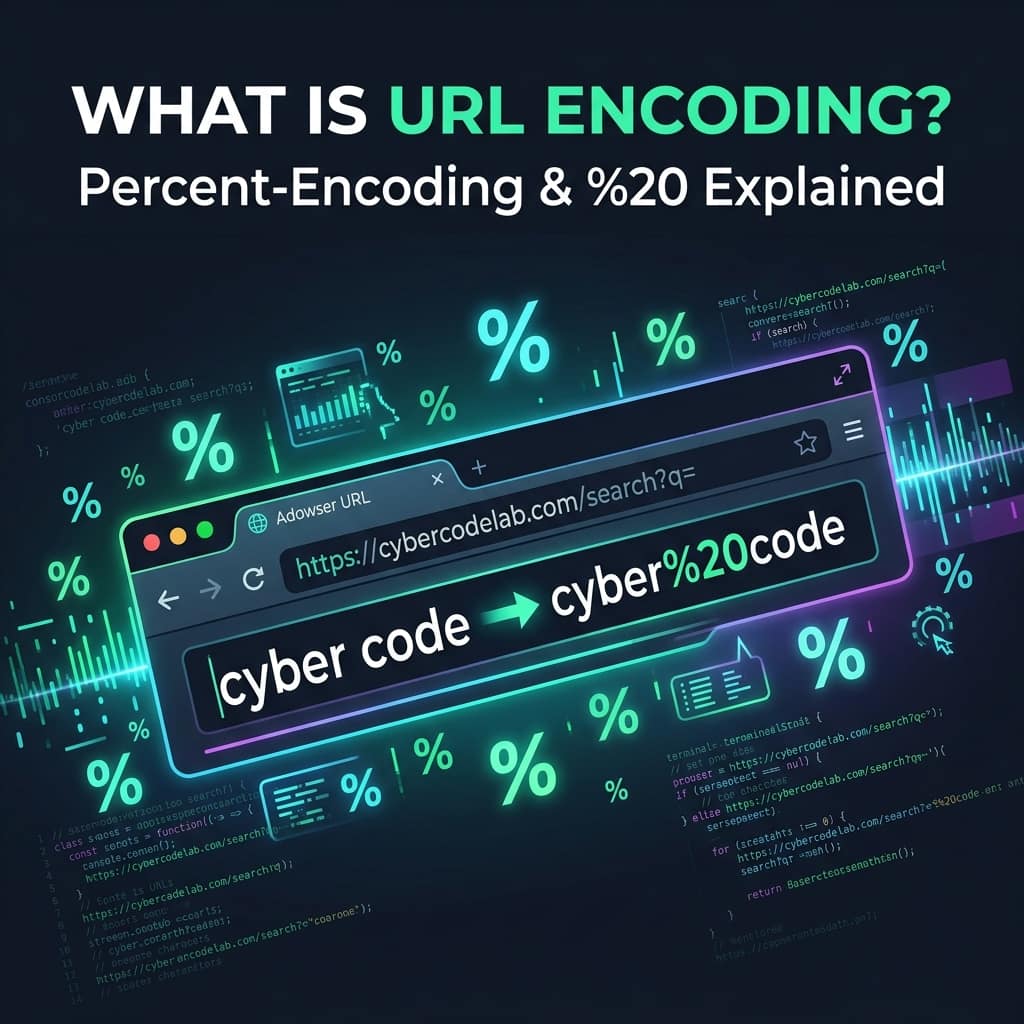
What Is URL Encoding? %20 and Percent-Encoding Explained
Ever seen %20 in a link? That's URL encoding. Learn why spaces become %20, which characters must be encoded, and how to encode a URL safely — with examples.
2026-07-18
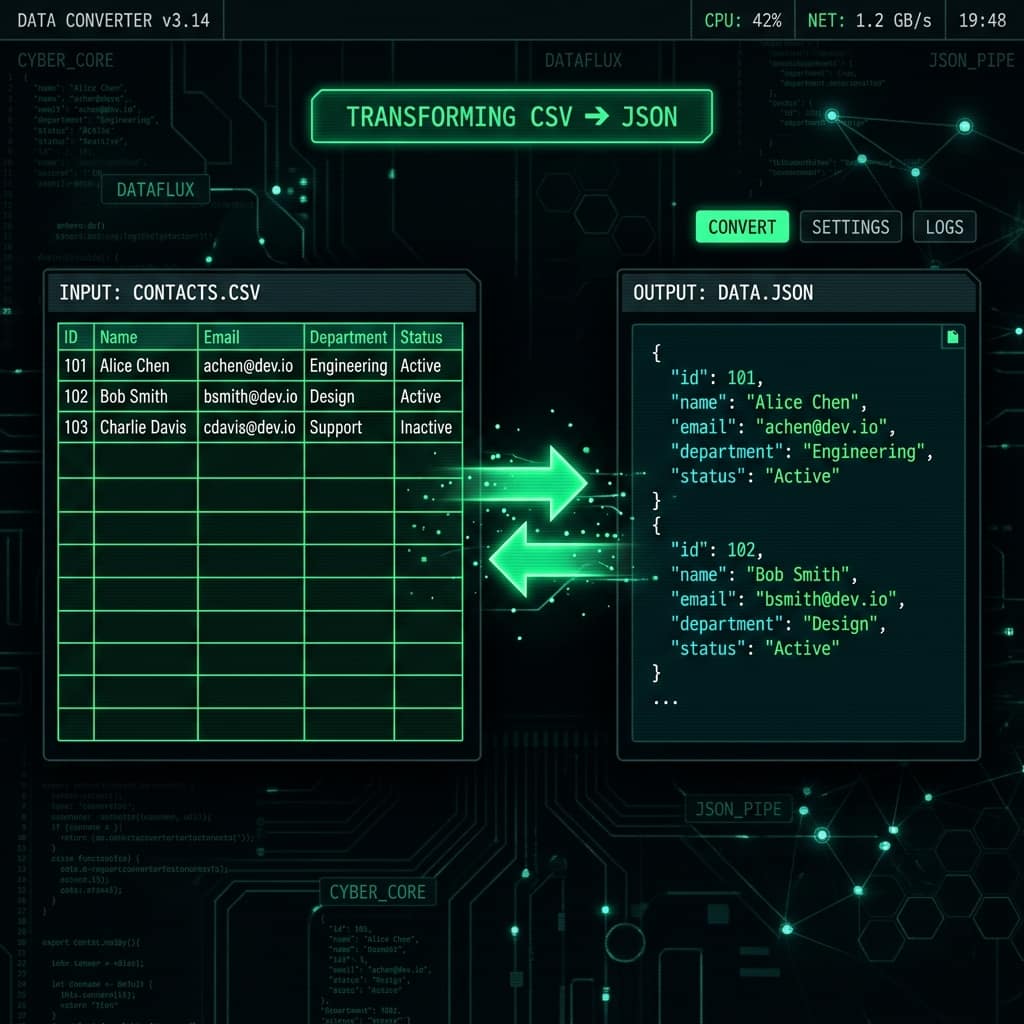
How to Convert CSV to JSON (and Back) Without Coding
Convert CSV to JSON — or JSON back to CSV — in seconds, no coding or uploads. Handle headers, delimiters, nested data and Excel quirks the right way.

2026-07-16
How to Count Words for Essays, Tweets and Meta Descriptions
Essays count words, X counts characters, Google measures pixels. The real word and character limits for 2026 — and how to hit them on the first try.

2026-07-16
JSON vs YAML: Which Should You Use in 2026?
JSON or YAML in 2026? Compare syntax, comments, speed and tooling — plus the simple rule most teams follow: YAML for humans to edit, JSON for machines.

2026-07-16
How to Fix "Invalid JSON" Errors: 7 Common Causes and Fixes
Fix "invalid JSON" fast: the 7 most common syntax mistakes — trailing commas, single quotes, unquoted keys — and how to find the broken line in seconds.

2026-07-16
camelCase vs snake_case vs kebab-case: Naming Conventions
camelCase, PascalCase, snake_case or kebab-case? See which naming convention each language expects — JavaScript, Python, CSS, URLs — with a reference table.

2026-07-14
What Does My IP Address Reveal About Me? (Less — and More — Than You Think)
Your IP address reveals your rough location (city level), your internet provider and your connection type — but not your name, exact address or browsing history. Here's exactly what websites can see.

2026-07-11
How to Create a Strong Password You Can Actually Remember
The two proven ways to make a strong password: a truly random generated password stored in a manager, or a 4-5 word passphrase for the few passwords you must memorise. Here's exactly how to do both.

2026-07-07
What Is a Unix Timestamp? Epoch Time Explained in Plain English
A Unix timestamp is the number of seconds elapsed since 1 January 1970 (UTC). Learn why computers count time this way, how to convert timestamps to real dates, and what the Year 2038 problem is.

2026-07-05
10 Free SEO Tools Every Blogger Should Use in 2026
The 10 free SEO tools that cover 90% of a blogger's daily needs — meta tags, snippet previews, schema markup, keyword density and more, all running in your browser.

2026-07-04
How to Check if Your Password Has Been Leaked (Without Risking It)
Yes, you can safely check a password against 900+ million leaked ones — thanks to k-anonymity, the password never leaves your device. Here's how it works and what to do if you're hit.

2026-07-03
DNS Records Explained: A, AAAA, CNAME, MX and TXT for Beginners
A plain-English guide to the 7 DNS record types you'll actually meet — what each one does, real examples, and how to check any domain's records for free.

2026-07-02
What Is Base64 Encoding and When Should You Actually Use It?
Base64 turns binary data into safe, plain text — it is not encryption. Learn how it works, why output is 33% bigger, and the 4 real use cases (plus 2 misuses).

2026-07-01
Why Browser-Based Tools Are Safer Than Upload-Based Ones
When an online tool processes your data locally in the browser instead of uploading it to a server, your sensitive data never leaves your device. Here's why that matters.

2026-07-01
MD5 vs SHA-256: Which Hash Function Should You Use in 2026?
Use SHA-256 for anything security-related; MD5 only for non-security checksums. Here's why MD5 broke, what collisions mean, and a decision table you can trust.

2026-06-30
How to Write Meta Titles and Descriptions That Get Clicks
Templates, character limits and the psychology behind search snippets that earn clicks — plus why Google rewrites 60% of titles and how to stop it rewriting yours.
2026-06-29
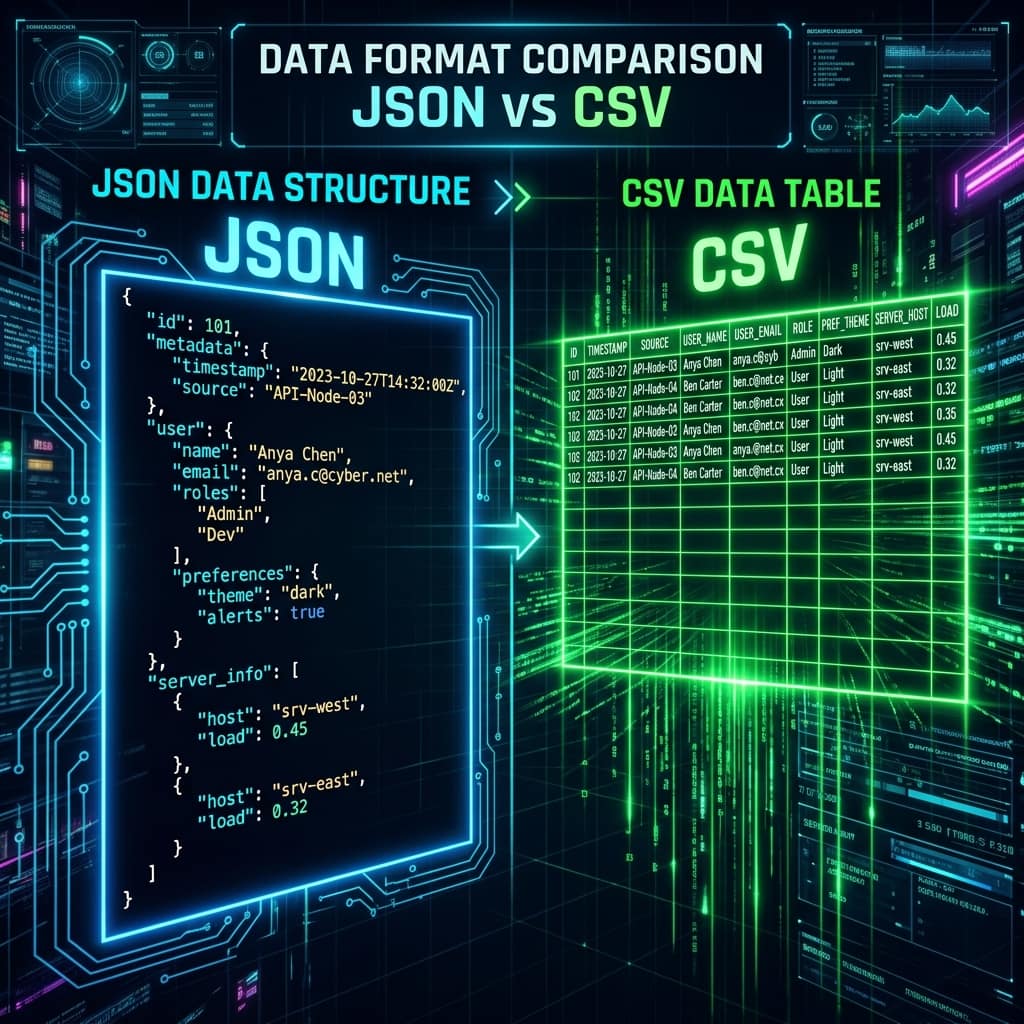
JSON vs CSV: Which Data Format Should You Use?
CSV for flat tables and spreadsheets, JSON for nested data and APIs — a practical comparison with file-size numbers, gotchas, and free converters for both directions.

2026-06-28
Learning to Code in 2026: Where Should a Complete Beginner Start?
HTML, CSS and JavaScript remain the most practical starting point for new programmers in 2026 — here's the reasoning, and a simple 90-day path.

2026-06-27
How Strong Is Your Password? The Math Behind Password Strength
Password strength is measured in entropy bits — and length beats complexity every time. See the real cracking-time math, why Tr0ub4dor&3 fails, and what 16 random characters buys you.

2026-06-26
What Is a UUID and Why Do Developers Use Them Everywhere?
UUIDs are 128-bit IDs that never collide without any central coordination — here's how v4 randomness works, UUID vs auto-increment, and when not to use them.

2026-06-25
How to Compress Images for the Web Without Losing Quality
Images are 50%+ of most pages' weight. Learn the resize-then-compress workflow, the right quality setting (hint: 80%), and when to convert to WebP — all with free browser tools.

2026-06-24
Robots.txt Explained: What It Can and Cannot Do
Robots.txt controls crawling, not indexing — the #1 SEO misconception. Learn the syntax, the noindex trap, real examples, and the mistakes that deindex entire sites.

2026-06-23
What Is Schema Markup? A Beginner's Guide to Rich Results
Schema markup is JSON your pages carry so Google can show stars, FAQs and prices in search results — and AI engines can cite you. Setup guide with the 5 schemas that matter.